Product design
UX/UI design
Interaction design
Vibe coding
Prototyping
Product strategy
Mobile (MVP / Prototype)
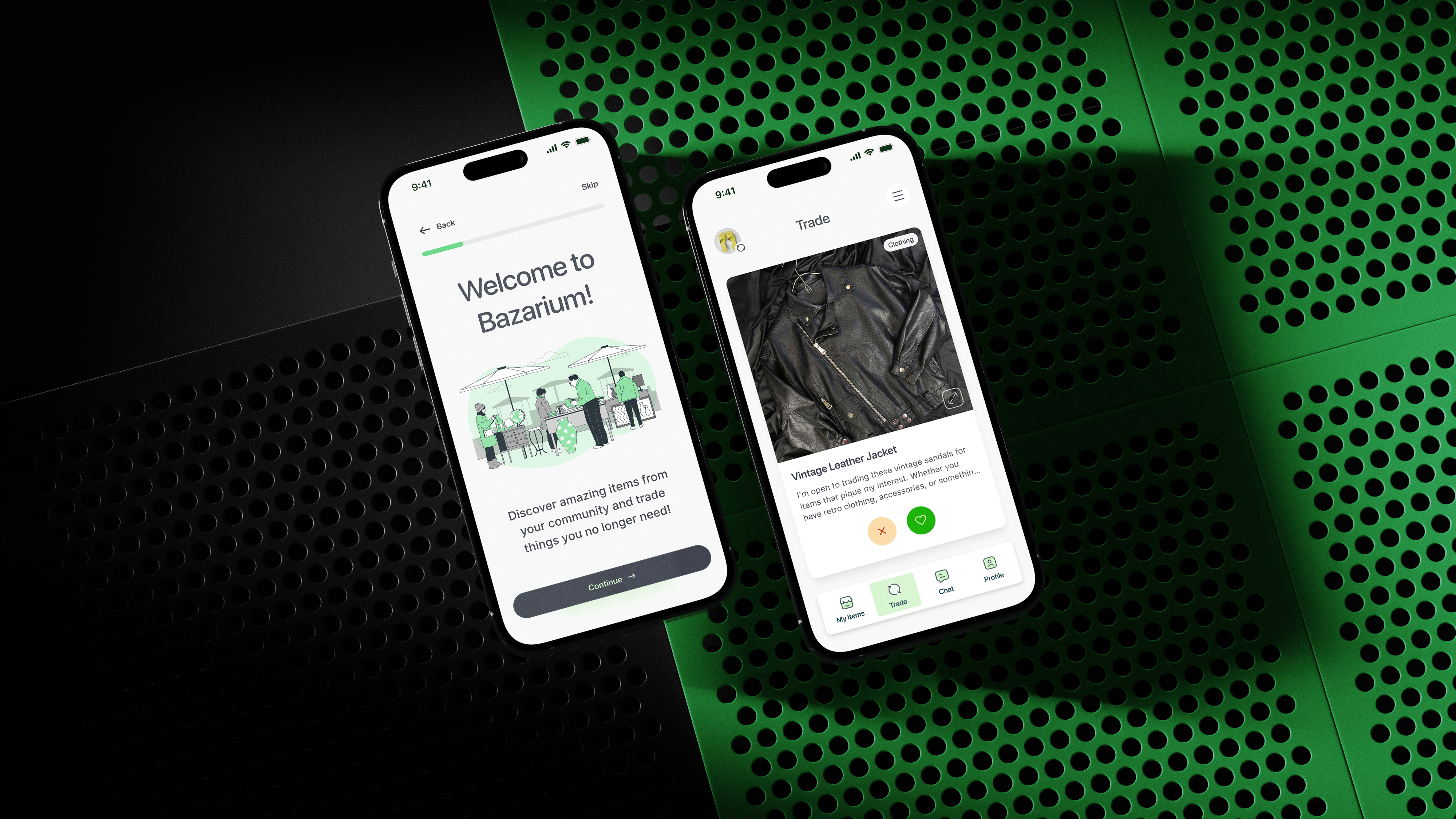
Bazarium is a circular economy mobile app that enables people to swap items instead of buying new ones. The product focuses on reducing waste, extending product life cycles, and encouraging more sustainable consumption habits through a simple, swipe-based user experience.
While swapping is a viable alternative to buying, most unused items end up either stored indefinitely or discarded. This pattern contributes to unnecessary waste and increased CO₂ emissions, while simultaneously pushing people to purchase new, often low-quality products.
At the same time, rising living costs mean many people have less disposable income, yet remain exposed to constant consumer pressure. The result is a cycle where people buy more, keep less, and discard faster, even when suitable items already exist elsewhere.
Therefore, I was responsible for shaping the product from an early-stage idea into a clear, usable MVP by defining the core user flows, interaction patterns, and the behavioral model behind the swapping experience.
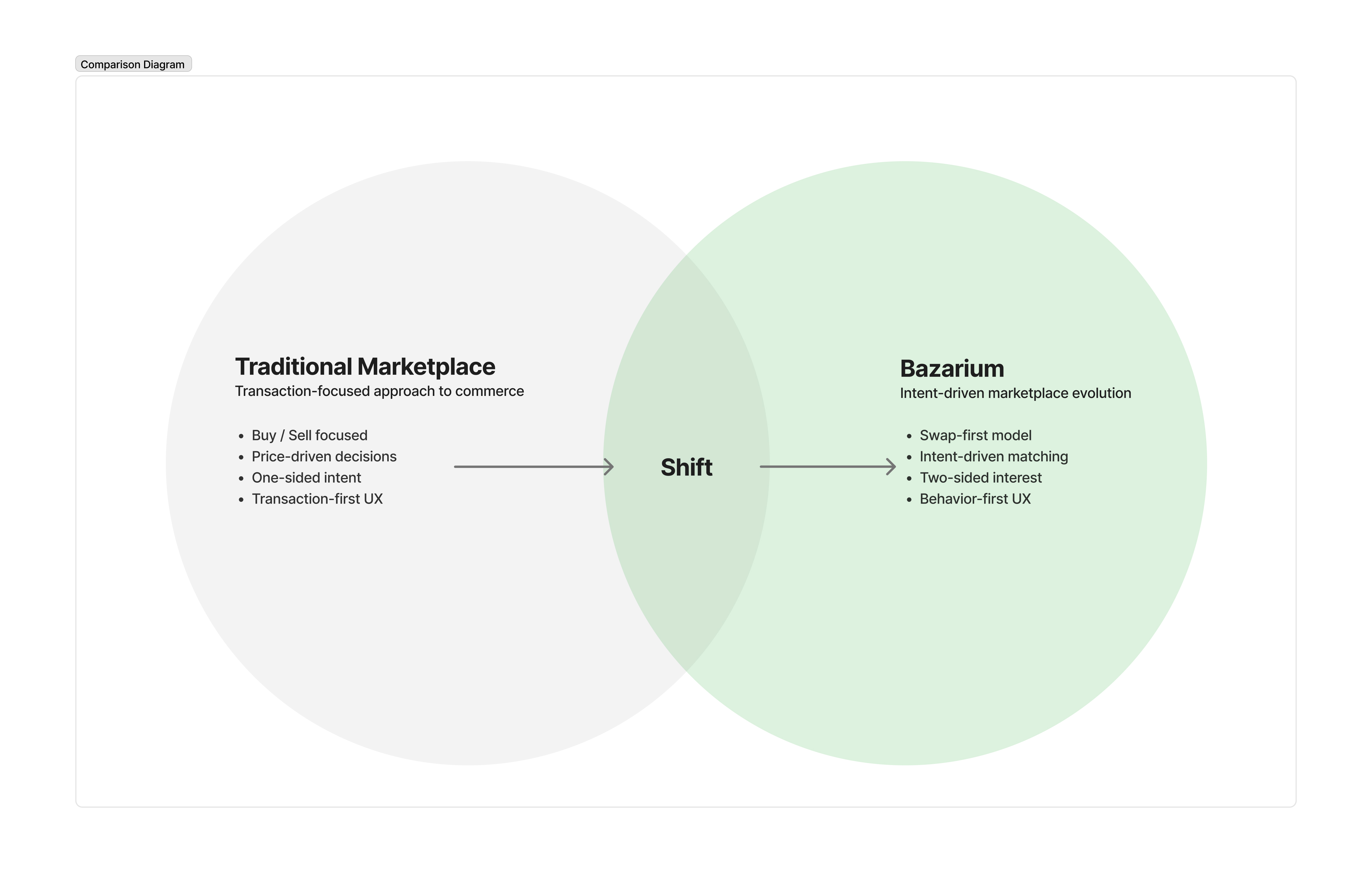
Most digital marketplaces are designed around buying and selling. Even platforms that support second-hand goods still prioritize transactions, pricing, and monetization, not swapping or trading.
From a UX perspective, swapping introduces additional complexity:
The challenge was to design a swap-first marketplace that feels as intuitive and engaging as modern swipe-based (tinder like) apps, without turning sustainability into friction.
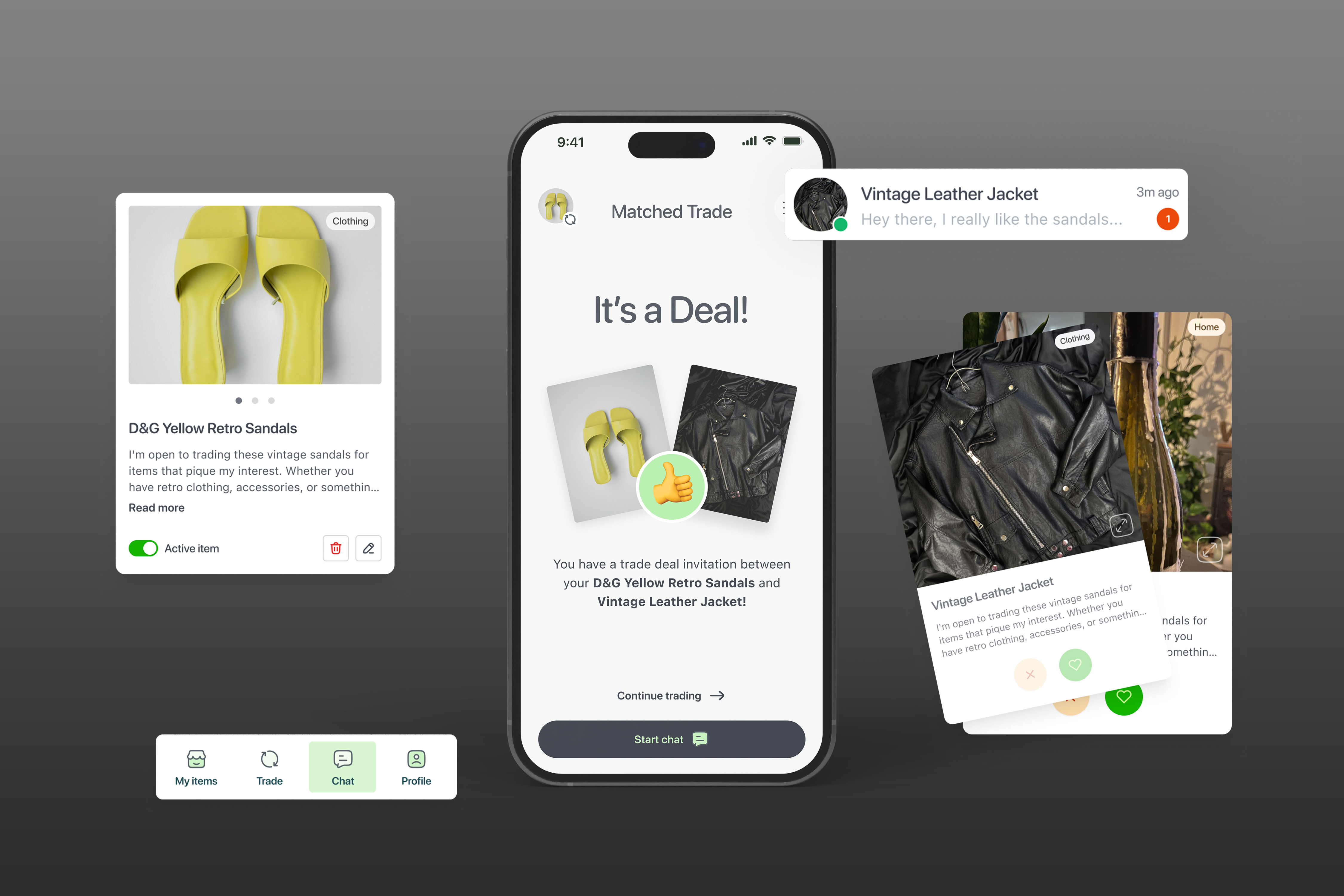
Bazarium rethinks the traditional marketplace model by shifting from transactions to intent-driven matching.
Success would be measured in two ways:
1. Qualitatively (before MVP the launch) through clarity of the core flow, usability of the MVP, and stakeholders approval.
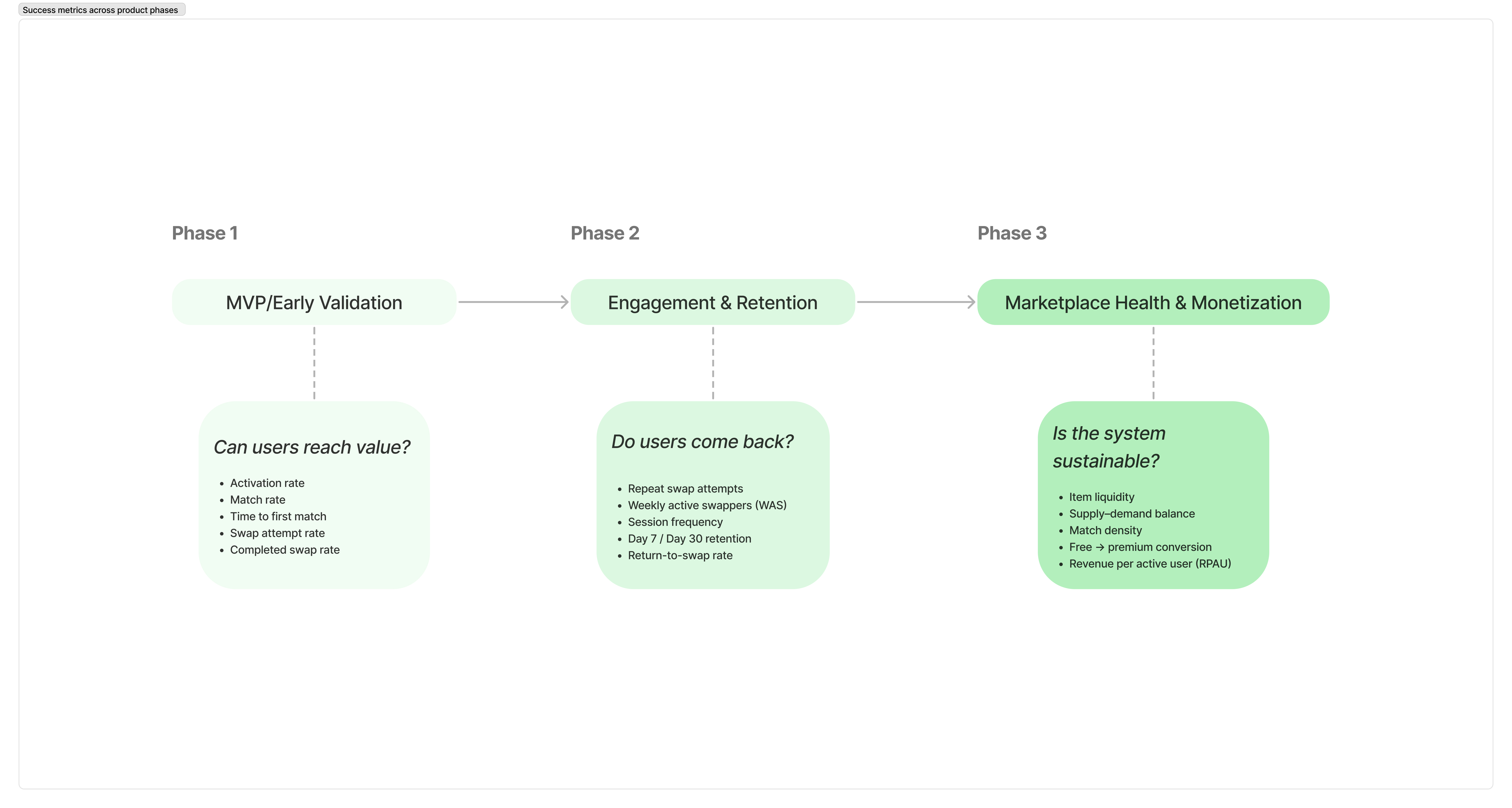
2. Quantitatively (after the MVP launch) through 3 phases:
Phase 1: MVP / Early Validation
Phase 2: Engagement & Retention
Phase 3: Marketplace Health & Monetization
I started by analyzing existing resale and marketplace platforms to understand why swapping is often poorly supported. Most platforms optimize for pricing and transactions, not mutual interest.
Based on this insight, I explored interaction models outside of traditional marketplaces, particularly swipe-based matching patterns, to reduce complexity and make discovery feel lightweight and engaging.
The process included:
The focus throughout the process was not feature quantity, but behavioral clarity.
The product was designed around a single, repeatable loop, focused on intent, not transactions. Every design decision supports clarity, momentum, and mutual interest.
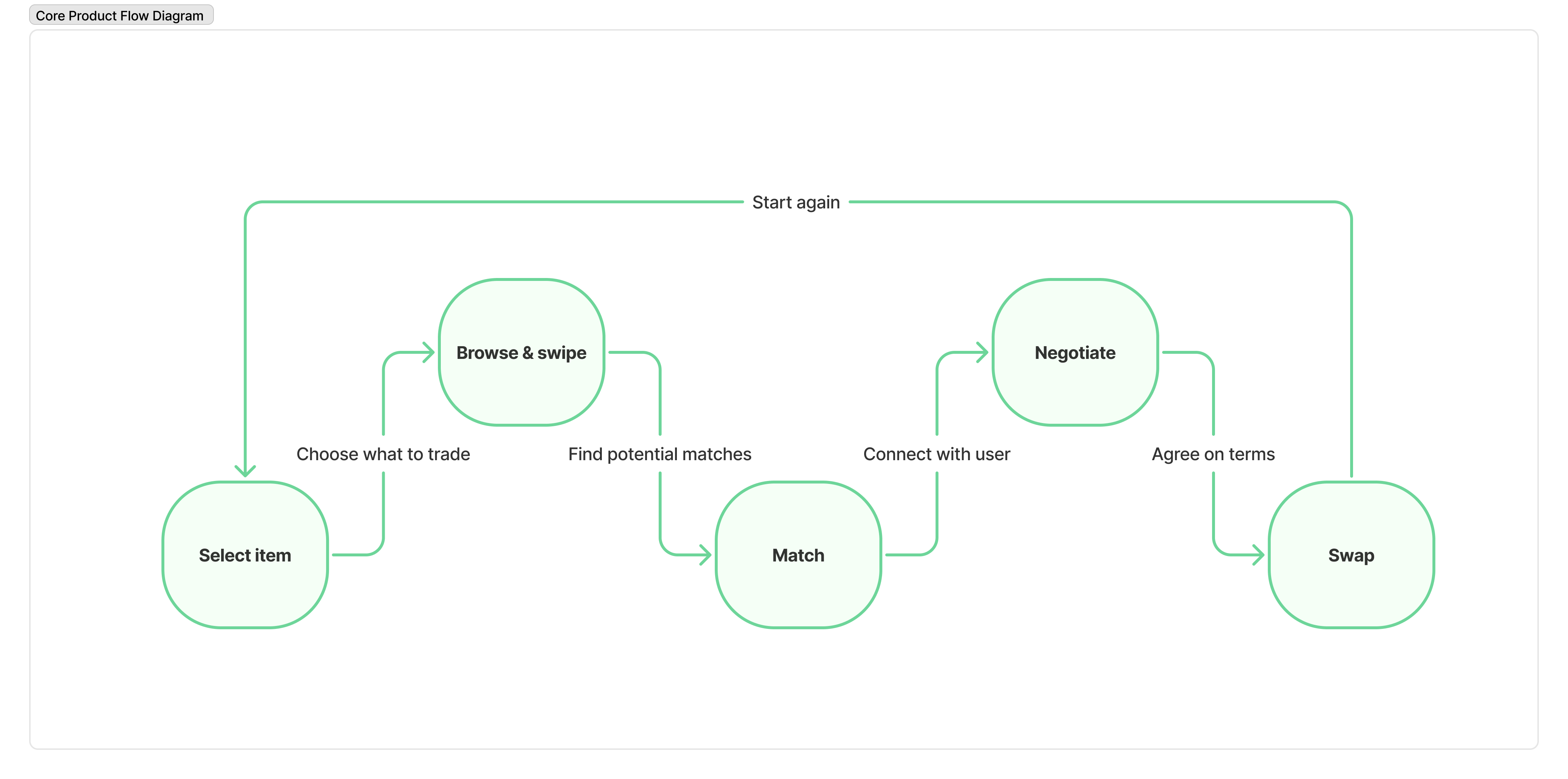
The final product concept is a mobile-first, swipe-driven swapping experience.
The design allows users to:
By borrowing familiar interaction patterns, the experience lowers cognitive load and helps most of the users immediately understand how the product works even though the underlying behavior (swapping) is less common than buying.
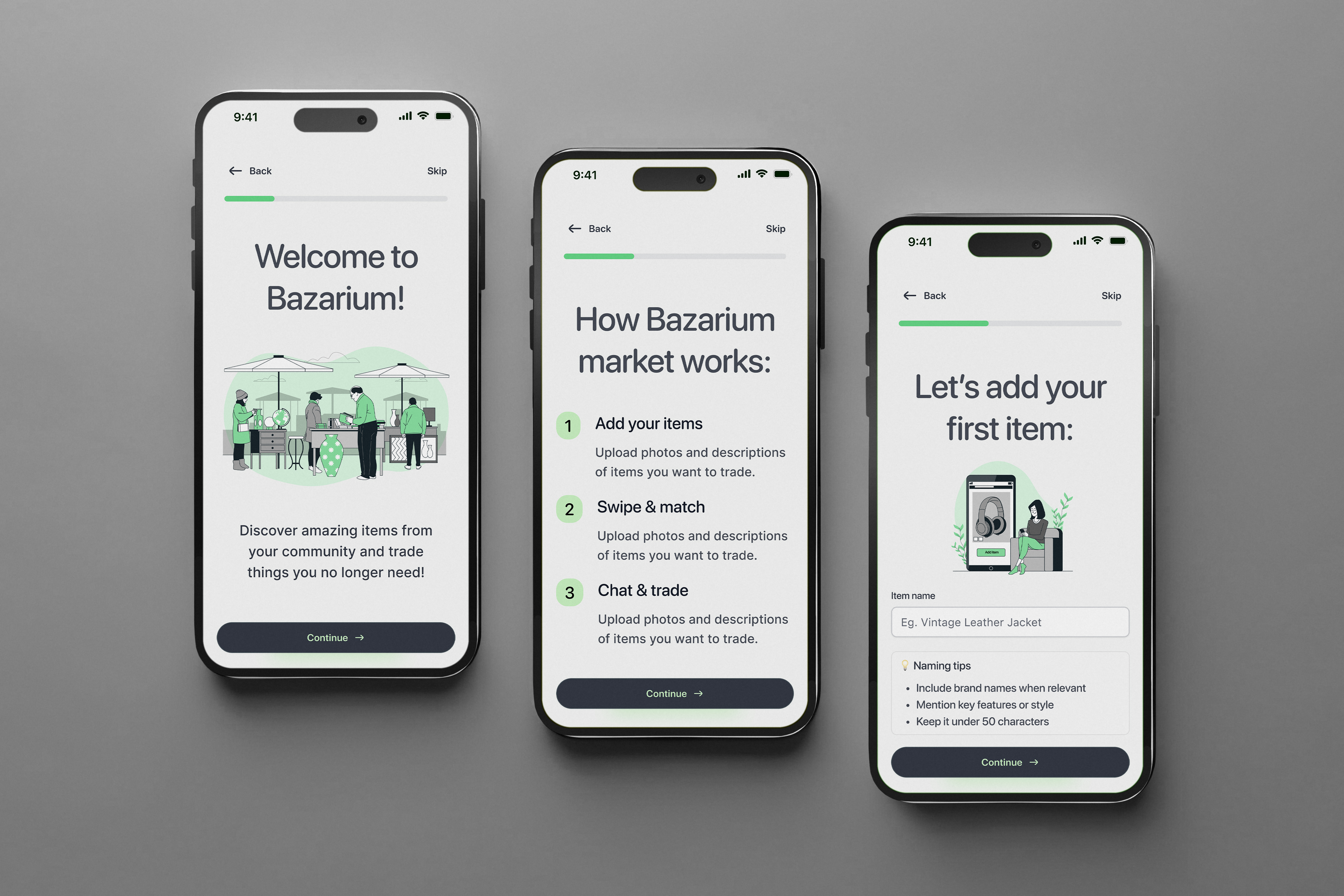
An very important part for the first time users is the onboarding experience that explainst the mechanics and flow of the product while at the same time allows the user to create their first trade items.
The visual design supports this by staying clean, friendly, and community-focused, avoiding the transactional feel of typical marketplaces.
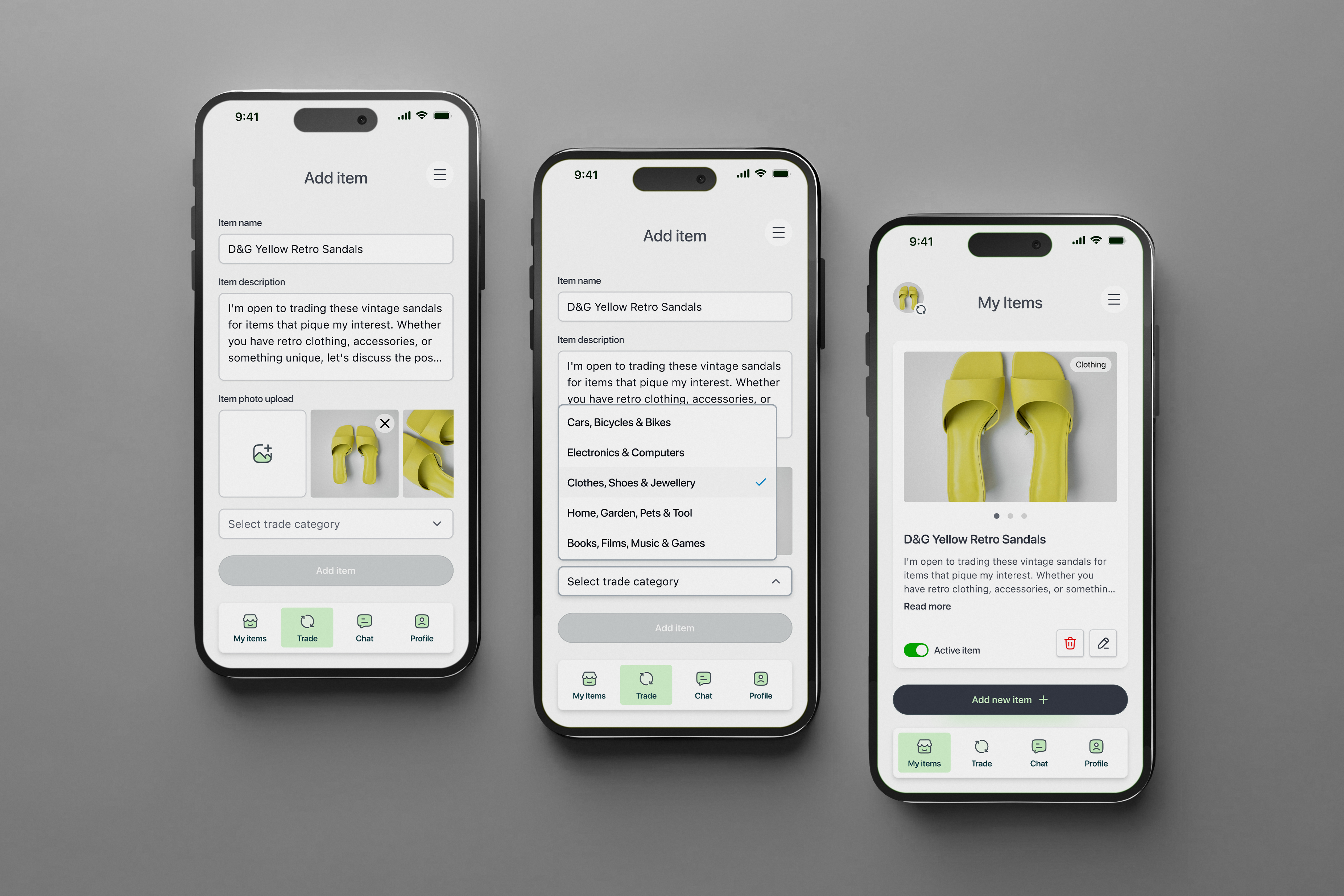
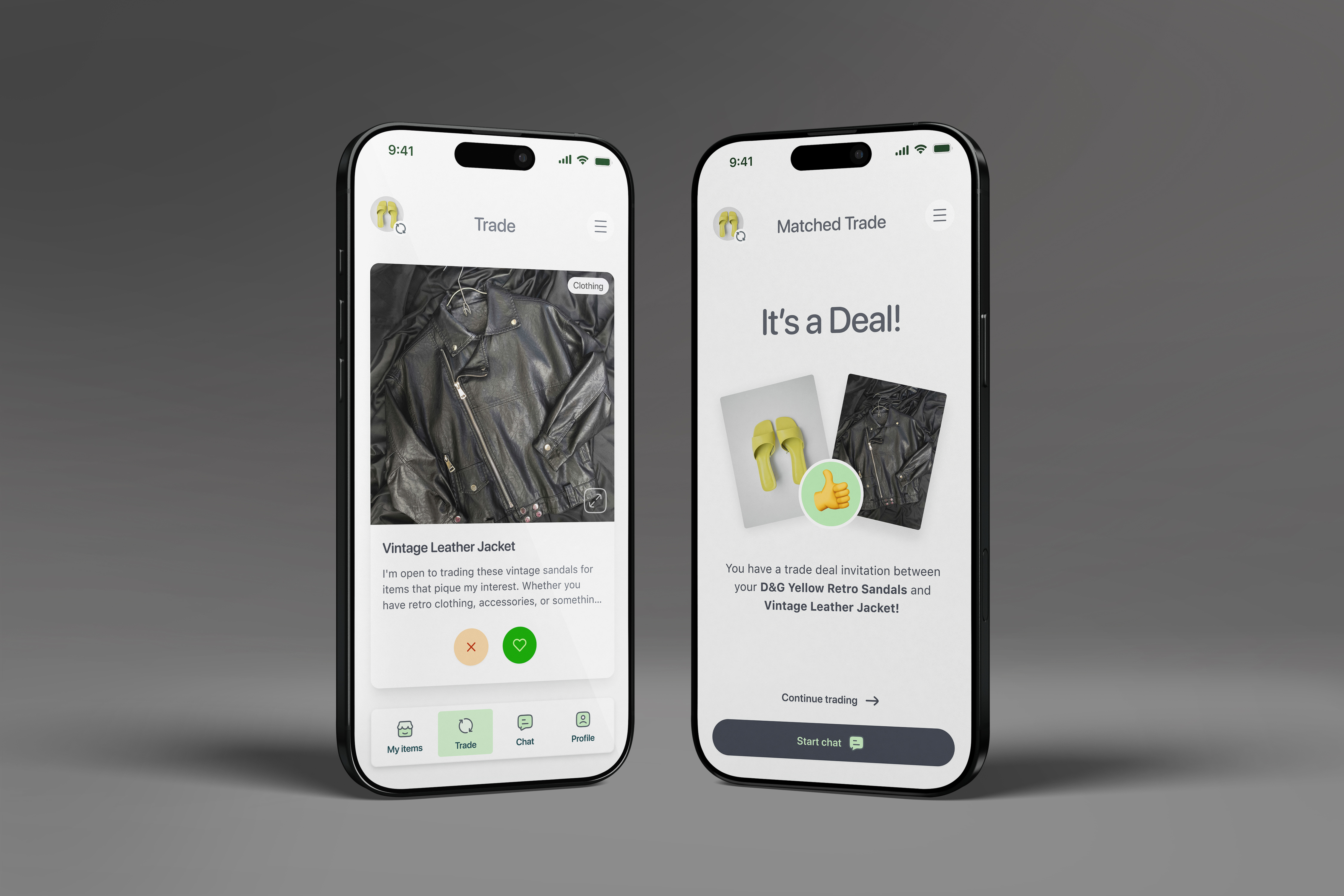
At this stage, Bazarium exists as a fully designed MVP and is a part of a startup accellerator where it's being fully developed. It is estimated that during the second quartal of 2026, Bazarium will be launched in to the test phase.
Key outcomes:
The design successfully communicates both the UX vision and the product strategy, making it suitable for early validation and investor presentations.
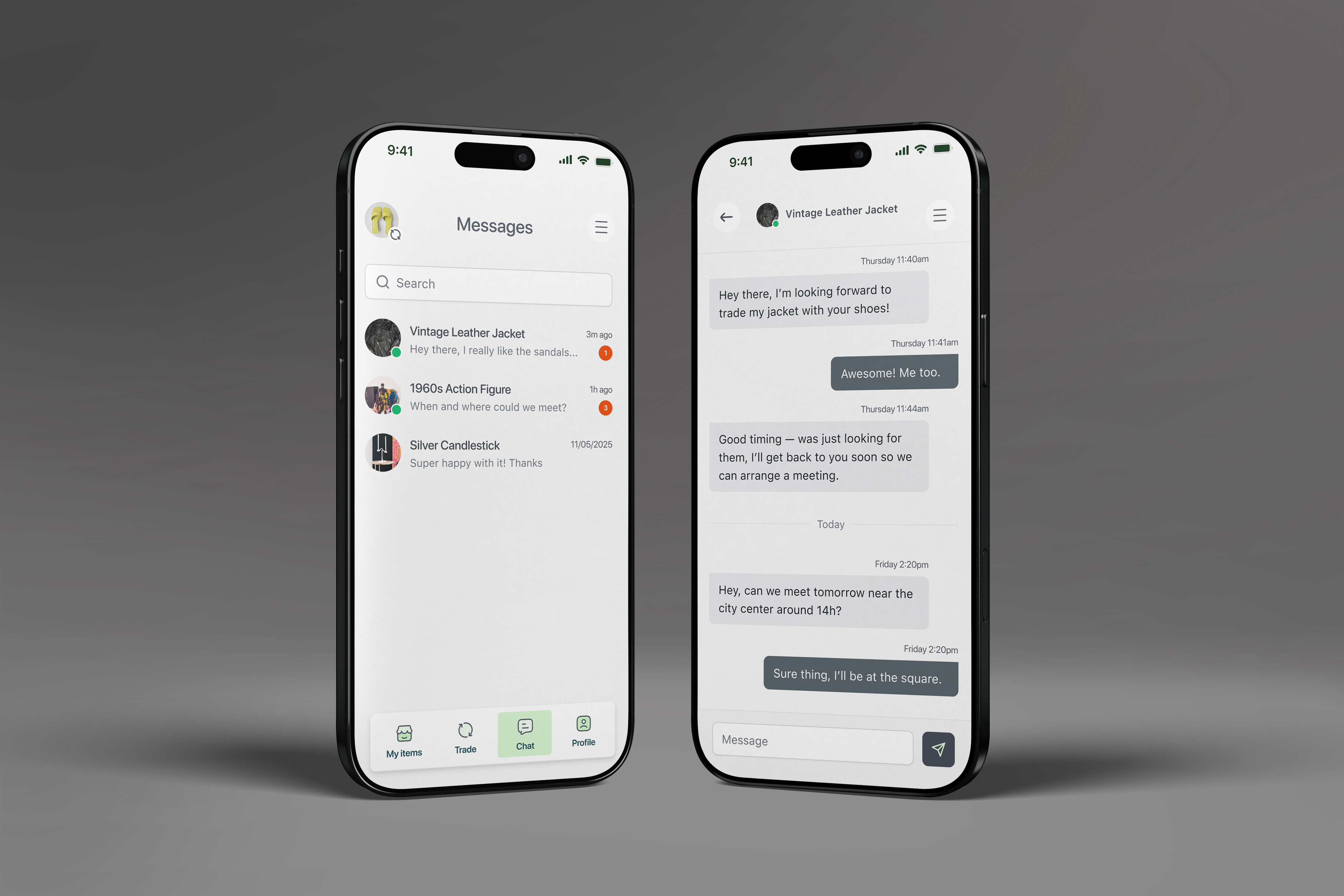
Working on Bazarium reinforced that designing for sustainability is ultimately about designing behavior change.
Learnings: