Lead designer
Interaction designer
Visual designer
Prototype
Mobile (MVP)
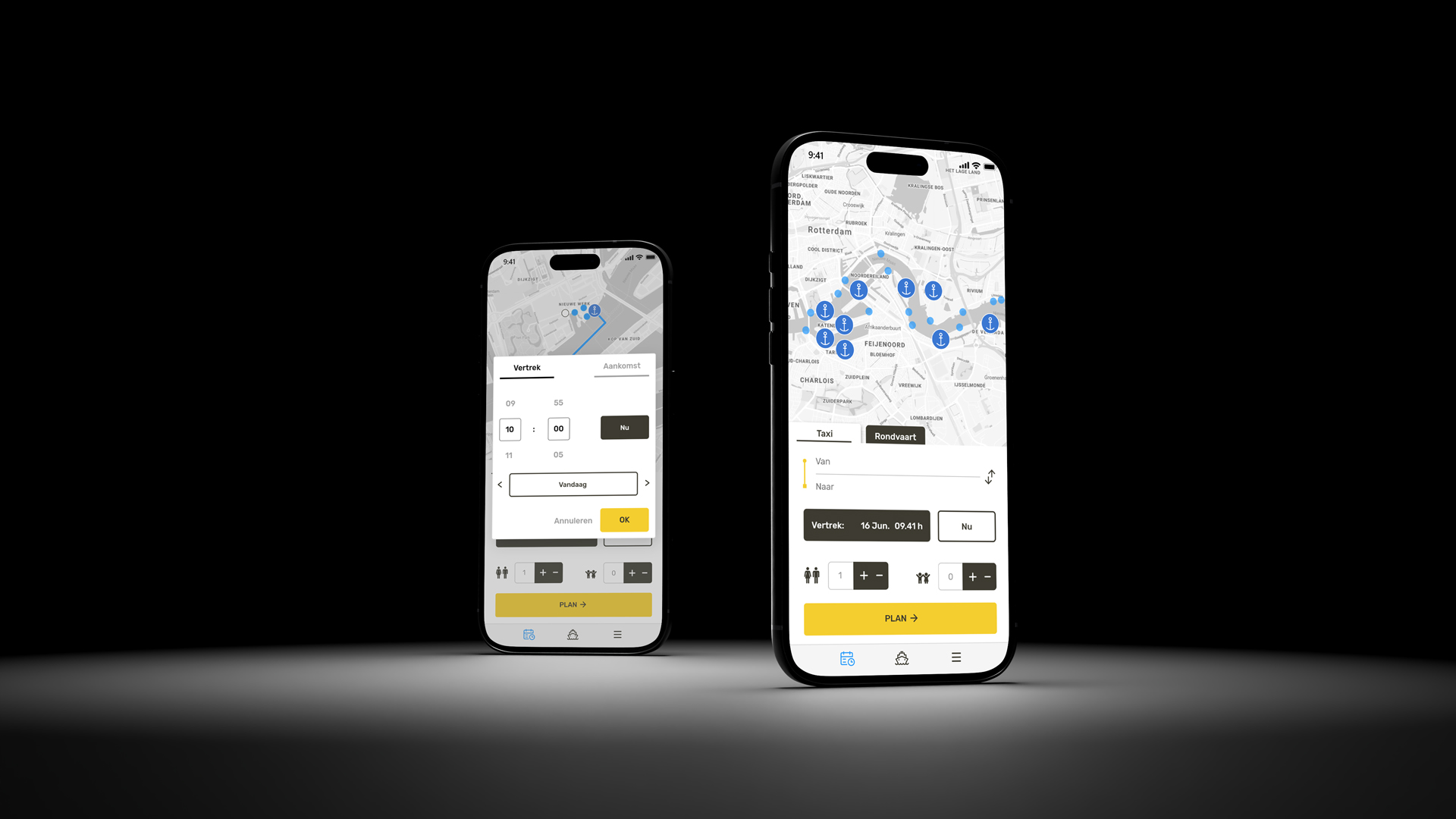
Water Taxi Rotterdam (WTR) is one of the city’s most recognizable transport services, connecting passengers across the Maas River. Despite its popularity, booking a ride was still a frustrating experience because users could only reserve rides via the website, which lacked real-time updates and accessibility features.
Flying Fish Tech, a maritime solutions tech company from Rotterdam found an opportunity to solve this problem by offering WTR a whitelabeled solution.
What we built was a prototype for an mobile app MVP that made booking a water taxi as intuitive as ordering a ride on land while addressing core usability issues and convincing stakeholders to fund full-scale development.
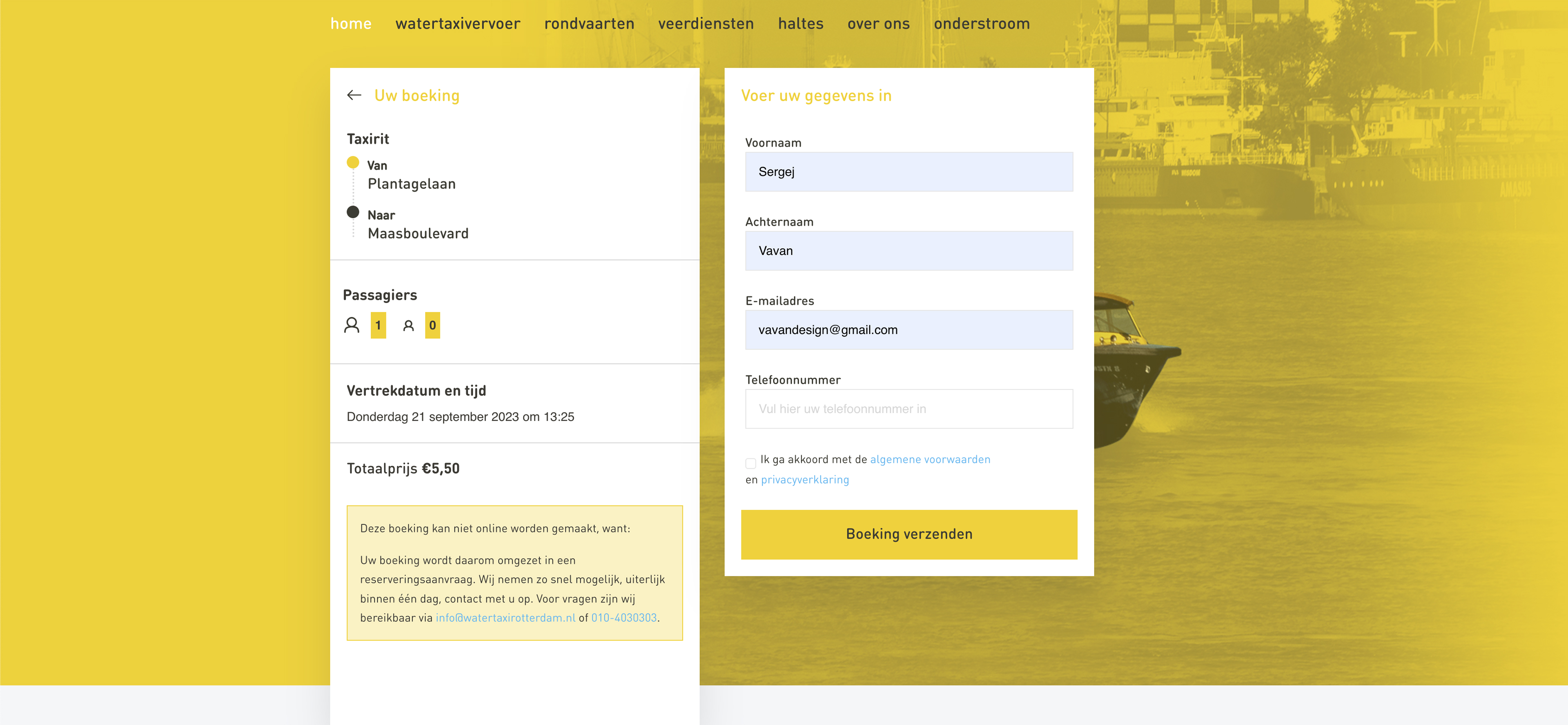
The existing WTR booking system relied on a static web form, offering no live information about taxi availability or wait times. As a result, customers often faced uncertainty about pickup points, operating hours, and prices.
User feedback highlighted three consistent pain points:
Our challenge was to deliver a user-tested MVP within just three months, a working prototype that would demonstrate business potential and user demand.
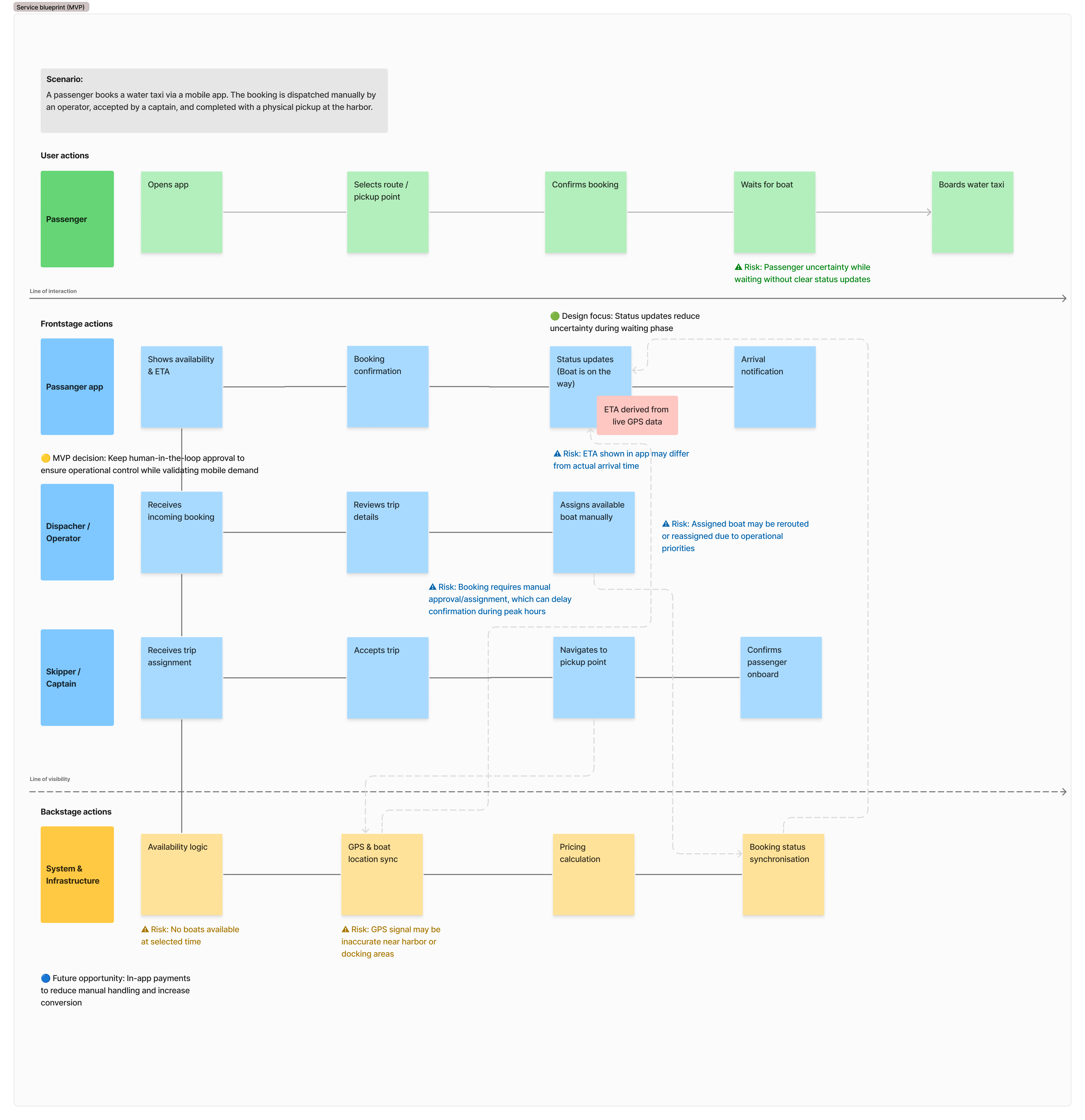
Before moving into detailed UX flows, I mapped the full service to understand how passengers, operators, captains, and systems interact in a live, time-critical environment.
This helped align design decisions with real operational constraints and identify where the MVP needed to reduce uncertainty rather than automate prematurely.
After the service mapping I began user and market research, analyzing transportation apps such as Uber and the NS App (Dutch Railways) to understand patterns in real-time booking and route tracking.
In parallel, I conducted a Google Forms survey and analyzed Google Reviews from existing WTR passengers. The feedback confirmed what the team suspected: while users loved the experience of riding, they struggled with planning and booking.
We used these findings to define key design principles:
From there, I developed wireframes and low-fidelity prototypes, testing early booking flows to identify friction points such as unclear date pickers and location inputs.

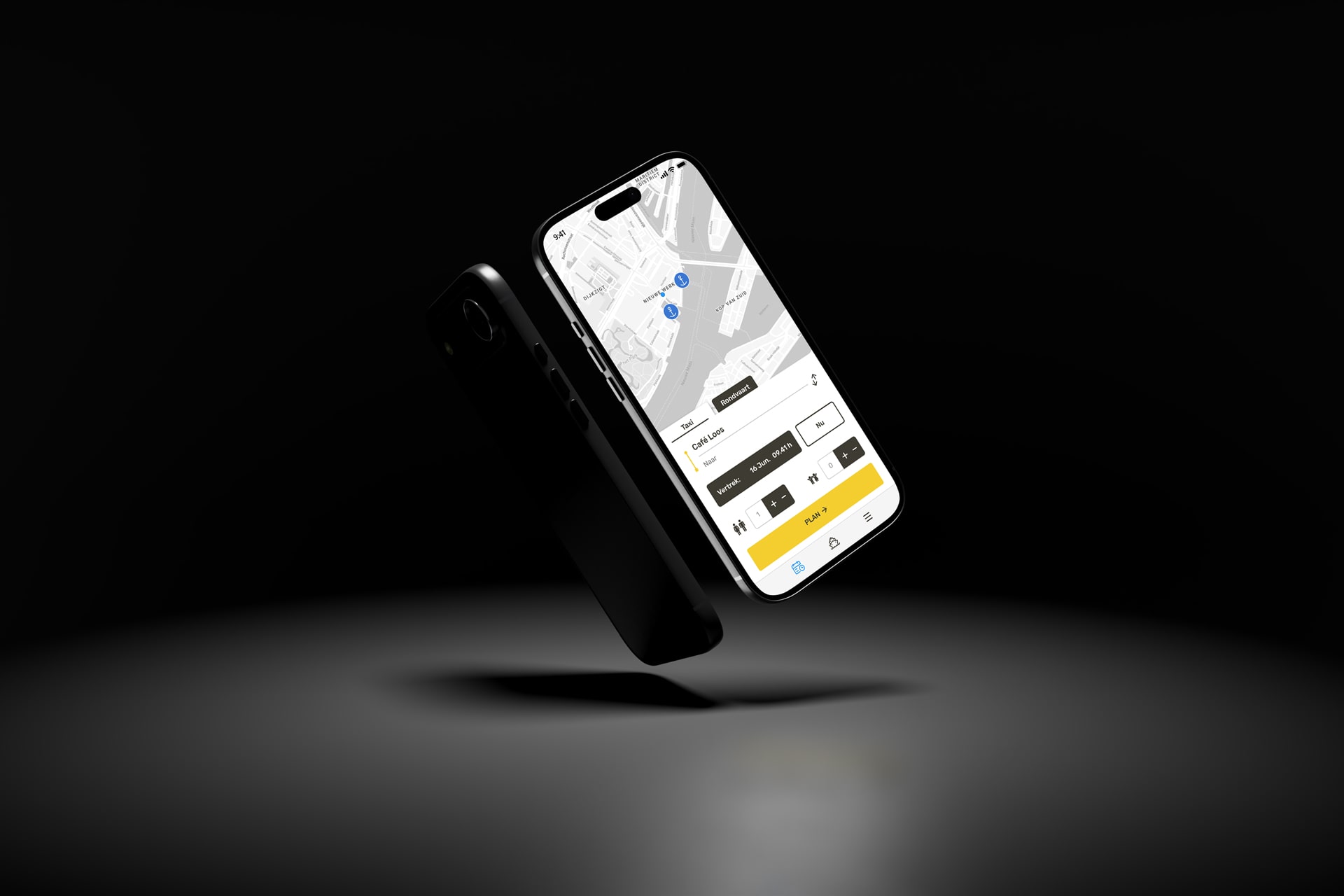
The final MVP centered on a map-centric mobile interface, a clear visual experience where users could view taxi positions, select pickup and drop-off points, and see route suggestions based on real-time availability.
Key design elements:
The visual language was deliberately minimal, inspired by the clean navigation systems of Uber but localized for Rotterdam’s maritime identity.


We tested the prototype with target users and incorporated their feedback through several iteration cycles:
These refinements helped reduce confusion and made the booking experience more fluid and predictable.
Within three months, the team successfully presented a fully interactive MVP prototype to stakeholders. The demo clearly illustrated how a digital product could simplify bookings, improve service perception, and increase ride frequency.
The project achieved its goal: stakeholder approval for further app development.

The MVP successfully validated demand for mobile water taxi bookings and secured stakeholder approval for further development.
With more time and scope, the next phase would focus on moving from validation to scalability and revenue enablement.
1. Integrated payments & pricing transparency
Implement in-app payments to remove manual confirmation steps and reduce friction at peak hours. This would include clear fare breakdowns, cancellation policies, and receipts, aligning user expectations with operational realities.
2. Operator & captain tooling integration
Tighter integration with dispatcher and captain systems to reduce manual coordination, improve ETA accuracy, and surface real-time service constraints directly in the passenger app.
3. Data-driven optimization
Use booking and route data to identify high-demand locations and time windows, informing service planning and future automation opportunities.